


Introducing: Timia Porter
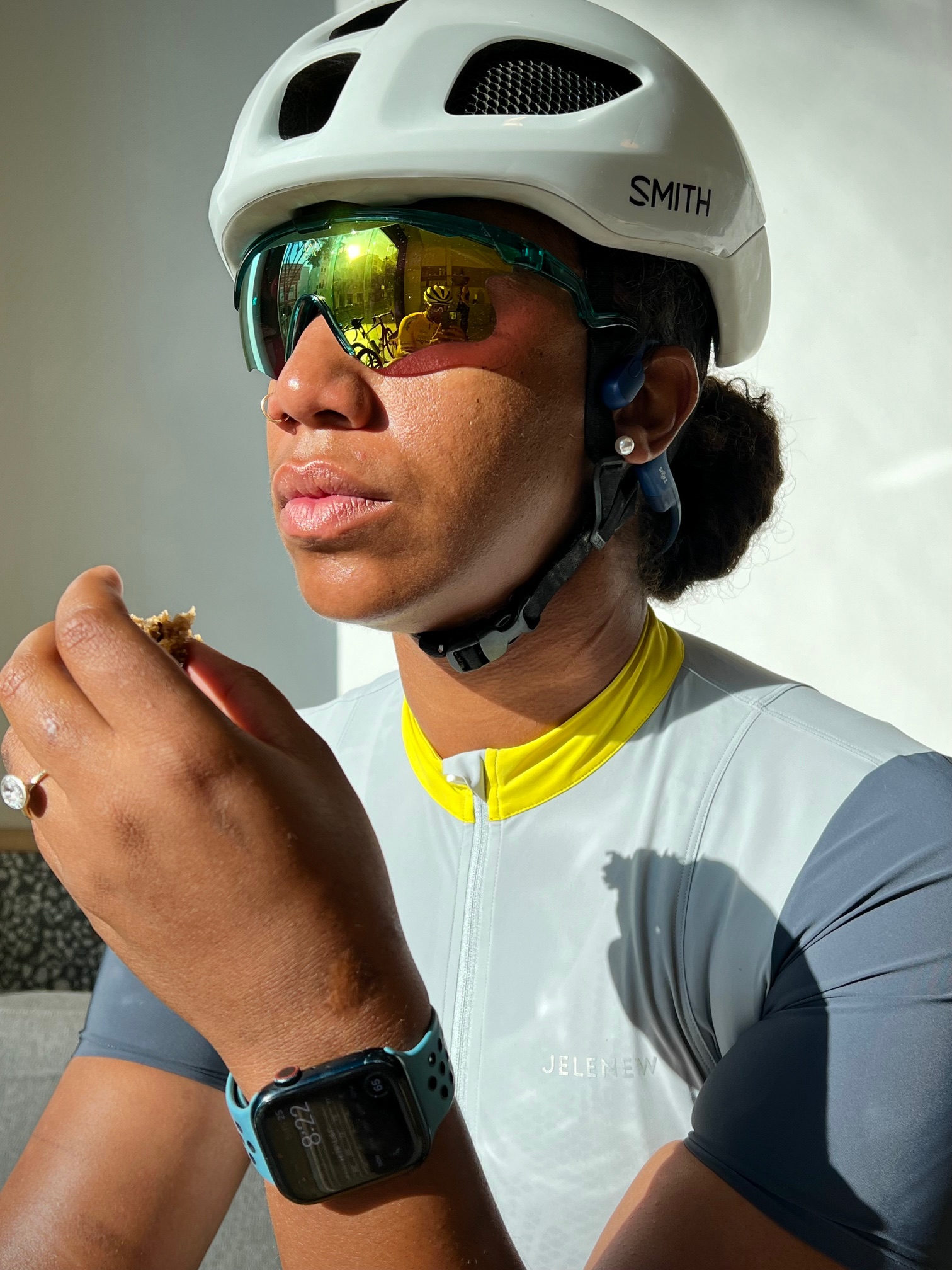
Welcome to CCC Introduces, our series spotlighting our new contributors, their stories and their journey to where they are now.
Today, we sit down with Timia Porter aka Thee Carbon Queen.
Where are you from
Inglewood, California
Where do you live
Sylmar, California
Are you part of a Club or Team
Yes, in 2025 I raced with QRT Race Team and I am the founder of One of Us, a collective for neurodiverse and BIPOC riders that centres wellness, belonging, and representation as a life not just a trend.
Socials: @theecarbonqueen
Tell us about yourself
My name is Timia Porter, though in the cycling world I move as Mimi or Thee Carbon Queen. I am a Black woman from Inglewood, CA, shaped by a place where resilience is not something you choose but something you inherit. I grew up in an environment that taught me early how to be alert, how to protect myself, how to hold strength even on days I was tired of carrying it. For a long time, my life was about survival, responsibility, and meeting the needs of everyone around me before I ever paused to ask what I needed for myself.
I am a mother, a veteran, a creative, a late-diagnosed neurodivergent woman who has spent years unlearning the idea that softness and power cannot coexist. I built my business Turquoise + Salt, from my dining room table, from heartbreak, from healing work, from intuition, from prayer, from the gut feeling that I was meant to build something that felt like home not just for me but for others navigating their own becoming.
My life has not been linear. I have loved, fought, rebuilt, unravelled, and risen more times than I can count. I have walked out of an abusive relationship and into a season of reclaiming myself piece by piece. I have held grief and hope in the same breath. I have reinvented my life in ways that the girl I used to be would barely recognise, let alone believe she deserved.
Cycling entered my life during a time I felt lost in my own mind. ADHD had me tangled in thoughts, trauma had my nervous system wired into survival mode, and I was craving something that helped me feel both grounded and free. I didn’t come to the bike looking for joy. I came looking for control, for peace, for a moment where my body and mind could finally coexist without fighting each other. Somewhere between the miles and the breathwork, cycling became a mirror — showing me my strength, my softness, my courage, and the parts of me I had abandoned trying to hold everything together.
Now, I ride not just for fitness but for truth. For clarity. For the little girl in me who never saw a cyclist who looked like her. For the woman in me who is still learning to choose herself.
Everything I am connected to now — wellness, storytelling, community and movement is an extension of my own healing. I don’t pretend to have it all figured out. What I do have is a deep commitment to making sure people know they are not alone in their journey, their struggles, or their joy. The way I lead, build, and ride is rooted in intention and the belief that when people feel safe, they can finally feel free.

What do you love about cycling
Cycling is the first place my mind ever felt quiet. As someone with ADHD, my brain rarely stops moving. On the bike, everything funnels into breath, cadence, and the sound of the world passing by. I love the intimacy of it and the conversations I have with myself when there is nowhere to hide. I love the way my body surprises me, how I find strength on days I feel weak, how the miles become medicine. Riding gives me permission to take up space, to move at my own rhythm, and to feel present in a way I struggle to access anywhere else. It’s freedom, but it’s also truth.

What barriers have you faced in cycling
I’ve faced the barriers that come with being visibly black, visibly feminine, and visibly different in a space that was not designed with me in mind. There were rides where no one made eye contact. Races where people questioned why I was even there. Group rides where I felt invisible until someone needed a reason to judge my kit, my weight, my pace, my presence.
And then there’s the neurodivergent layer — the overstimulation, the social puzzles, the unspoken rules I never got the manual for. It took me a long time to understand that the problem wasn’t me. The problem was a culture that doesn’t know how to hold differences with care. Those barriers didn’t break me, but they shaped how I show up now. They showed me what I never want someone else to feel.

Why were you interested in contributing
Because silence is heavy, and a lot of us have been carrying heavy things alone. Because there are people who want to ride but don’t see themselves in the story cycling tells about itself.
Because I wished, when I first showed up to this sport, that someone had said, “You belong here too, even if they don’t know how to tell you that.”
I’m contributing because I want to widen the doorway — not just for Black riders, or for women, or for neurodivergent athletes, but for anyone who feels like they have to shrink to fit. I want to tell the truth with softness. I want someone to feel seen before they even clip in.
If you’re comfortable, tell us about your personal experience of diversity in cycling
Diversity in cycling has been complicated.
I’ve often been the only black woman on a ride. The only neurodivergent person willing to say, “Hey, this pace line is overwhelming my nervous system.” The only one who shows up with culture woven into her kit, her hair, her energy. I’ve had moments where I felt deeply welcomed and moments where my presence felt like an interruption.
What I’ve learned is that diversity isn’t about who you allow in the room — it’s how the room makes space for who people actually are. For me, true diversity feels like softness. Safety. Pace options. Music. Culture. Joy. Representation that isn’t tokenised. Leaders who understand community care, not community extraction. That’s why I’m building One of Us and the Dope-amine Ride. Not because I want to be separate from the cycling world, but because I want to build the kind of cycling world I needed when I started.

Your fondest memory on the bike
My fondest memory on the bike will always be the One Love Century. That ride felt like coming home in a way I had never experienced before. It was the first time I was surrounded by cyclists who looked like me, moved like me, laughed like me, and carried culture the way I do. The roads were familiar, but the feeling was new. I remember riding and realising I was not bracing myself. I was not shrinking. I was not trying to translate who I was so I could fit in.
I belonged. Fully.
There was a moment — quiet, simple, but unforgettable — when I looked around and saw a sea of Black joy on bikes. It was overwhelming in the most beautiful way. I could feel the history in our cadence, the resilience in our breath, the inheritance in our presence on that road. I could feel my ancestors in the wind. It was the first time cycling didn’t feel like a fight for space. It felt like a celebration of it.
One Love wasn’t just a ride for me. It was affirmation. It was nourishment. It was the reminder that the community can change everything. That I am not the only one carving out space in this sport. That we are out here, thriving, laughing, riding, taking up the room we were always meant to take.
It is still the ride that lives closest to my heart.


Comments