


Introducing: Ama Nsek
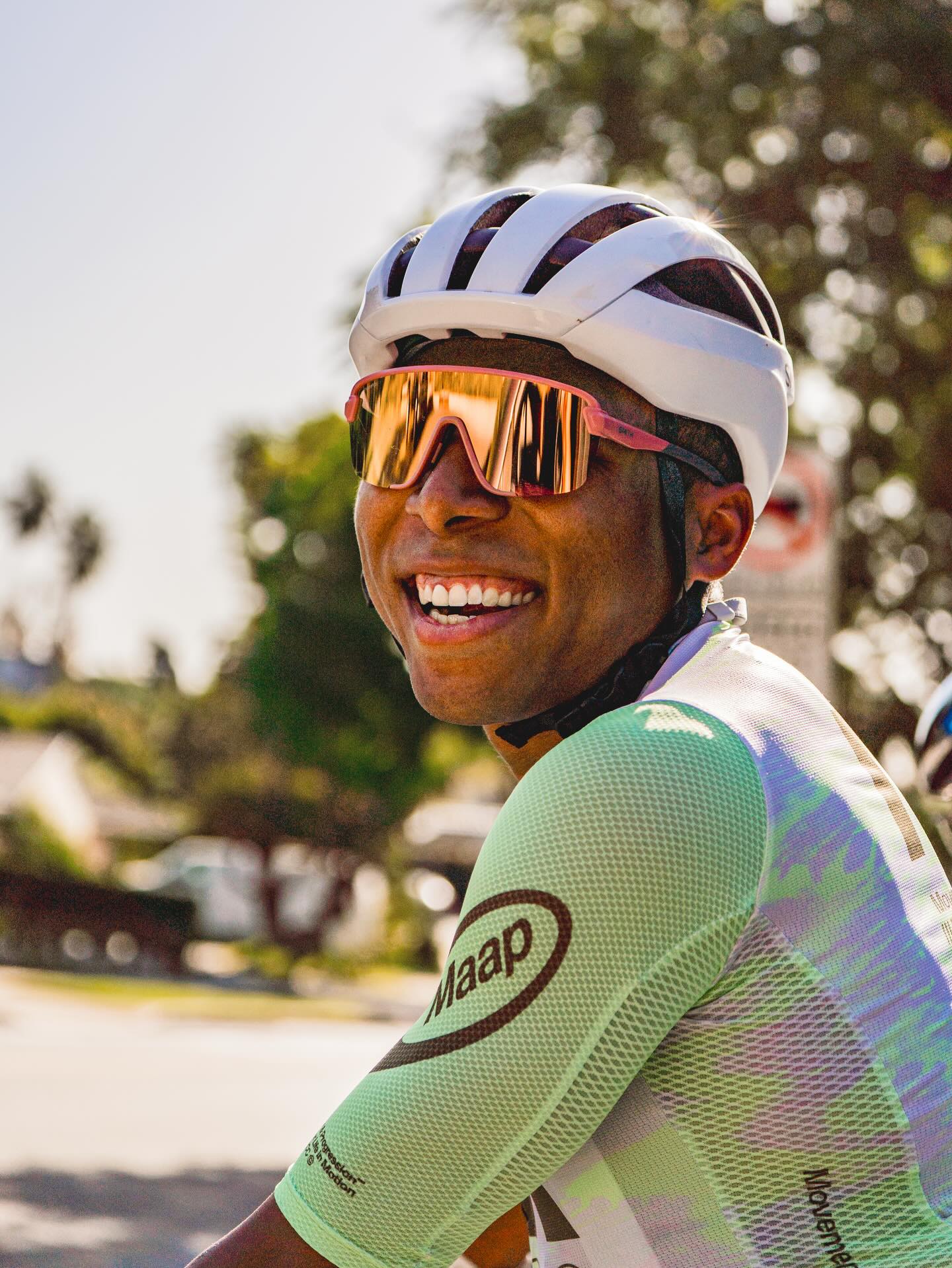
Welcome to CCC introduces, our series spotlighting the incredible contributors who give their time and energy to Cycling Culture Club.
As a three-time US National Champion and as a young man straddling culture in a country not known for its warm embrace, Ama is an inspiration. His skill, tenacity and talent has already him to great success and this editor thinks it may only be the beginning.
Words: Ama Nsek
Photos: Ama Nsek
Socials: @amansek

What do you love about cycling?
Cycling is exactly what you make of it, and that’s what I love most about it. Cycling has given me my best friends. It has allowed me to travel the world and race iconic events like Paris-Roubaix. Cycling has made me laugh until I cry and cry out of frustration. Emotionally, it’s one of the most volatile sports I’ve ever experienced.
Cycling has also given me one of the most fulfilling jobs I’ve ever had: working with kids. I’ve worked with riders between 13 and 20 years old. I’ve held them when they were too exhausted to walk after the finish. I’ve sat down with them and their parents to plan seasons. I’ve brought them together for weekends to create an encouraging environment where they can find their own rhythm, while learning from the older riders in the group. I’ve been the one calming them down after bad crashes and the one hugging them after national championship wins or emails confirming they’ve qualified for Team USA.
Today, while I still work with young riders at a high level, cycling has also become my job. I race bikes full-time as a Pro Privateer, supported by the brands I work with. Cycling gives me the opportunity to ride and race across the US, Mexico, and Colombia.
It also gives me the opportunity to share multicultural stories, all united through the sport. Cycling allows me to give back to the community by hosting group rides with my partners and creating initiatives that support the next generation.
Cycling gives me the greatest peace of mind while also pushing me to relentlessly pursue a better version of myself. I’ve sat at the top of a mountain four hours into a ride, 12,000 ft (3,900 m) above sea level, looking out across the entire Front Range. On that same ride, I might be executing intervals perfectly on the way back down. Then I finish the day at a brewery with 20 cyclists waiting for me, two margaritas in hand, on a perfect summer evening.
That balance is cycling to me.

What barriers have you faced in cycling?
The barriers I faced early on were mostly financial. Equipment is expensive, and I didn’t grow up in the sport, so we lacked the knowledge that many others take for granted. There were also cultural differences that came with growing up black with parents from different countries.
Despite that, I was able to take the sport pretty far, and I’m still pushing boundaries in my own way. But racing mountain bikes, there’s a huge difference between competing on an S-Works Epic and racing on an aluminium Stumpjumper with Shimano LX from 2015. My brother and I were still getting solid results, even podiums at nationals, while racing bikes that were significantly heavier and far less capable than the equipment many of our competitors had.
We also didn’t grow up wealthy like many of the riders who came through the sport in the 90s and 2000s. That meant we were missing certain resources. Many of our peers had former pros as mentors, people they could ask about race strategy or basic nutrition. We didn’t even have someone who could explain what the pathway to Team USA looked like. We had to figure it out ourselves.
And in a sport where every year counts as a junior, and where WorldTour teams scout directly from junior UCI results, learning through trial and error can put you at a serious disadvantage.
At the same time, my junior years were filled with ignorance, both intentional and unintentional, and cultural misunderstandings that made me feel like an outsider. At times, teammates would try to gain my approval so they could say they had a “Black friend,” while casually using racial language around me. Stereotypes would surface in small moments; whether it was jokes about food, assumptions about aggression, or the way people reacted whenever conversations about fighting came up.
Over time, the perception of me as “the Black rider” instead of simply Ama created constant misunderstandings and an exhausting need to manage how I communicated.
Rumours were sometimes spread about me that didn’t reflect who I was, but fit the stereotypes people already carried.
Travelling overseas with Team USA brought its own challenges. Being the only Black rider in fields that were more than 99% white made me stand out immediately. That sometimes meant being targeted in races, but it also meant dealing with stares and feeling constantly misunderstood. The need to code-switch and navigate those spaces could be draining.
Then I’d come home and try to explain to my friends why something that should have been a dream experience didn’t always feel that way, even if it involved racing some of the most legendary events in cycling.

I truly believe that if cycling were more accepting and understanding, the sport would naturally become more diverse. That diversity would create a groundswell that brings more riders into the sport from beyond the typical wealthy entry point.
Cycling prides itself on tradition; The history of the roads, the records from decades past, the endless debates like Pogacar vs Merckx. But the lack of diversity at the top can slow change at the grassroots level.
There have been moments in the sport that highlight this tension. Riders have used racist language during races and received relatively light consequences. Behind the scenes, I’ve seen brands pressure black cyclists to remain silent about racial abuse because the offending rider was more marketable or sponsored by the same company.
I’ve also had conversations with marketing managers where things seem aligned at first, only to hear that the company prefers to “stay true to its roots.” Too often, that becomes an excuse to avoid promoting black and brown cyclists or supporting more diverse cycling communities.
So when people ask about barriers in cycling, it often feels like navigating a dense forest. It’s something many of us have been learning to navigate our entire lives.

Why were you interested in contributing?
Stories need to be told. We need to know there are more of us in this sport.
I don’t usually like writing about adversity in cycling because it can come across as a victim narrative. But at the end of the day, these are realities many of us are navigating.
I’m hoping these words help others articulate frustrations they may have struggled to explain. It took me years to understand why certain experiences felt so difficult and so exhausting when they shouldn’t have been.
So I’m sharing this in the hope that it helps someone else — that it offers clarity, direction, and maybe even connection.

Your fondest memory on the bike
One memory that always sticks with me is a small moment riding with my brother in the middle of Nebraska.
We were driving the family van to the Tour of America’s Dairylands and pulled over so we could spin the legs. It was near sunset, and we were riding alongside a small lake. I remember feeling completely on top of the world, travelling across the country with my brother while we were both winning races.
He’s my best friend, and that was the exact moment I realised it. Funny enough, I still dream about that ride sometimes. We talked a bit, but we also had long stretches of silence, just enjoying the road.
Beyond that, I’ve been lucky to create incredible memories: bombing descents in Mexico and Medellín, winning major races in the US, flying over Switzerland after racing with Team USA, watching the riders I coach win in the SoCal League, late-night training rides with my best friend before my most successful season, or celebrating wins by riding Lime bikes after a few beers.
Those are the memories I carry with me every day.
Where are you from: Ontario, CA (an hour outside LA without traffic)
Where do you live: La Verne, California and Medellin, Colombia
Are you part of a club/team? I race as a Pro Privateer. Meaning I have individual contracts with each brand, such as Hunt, MAAP, Basso, Smith Optics, Wove, Continental, etc.
Do you want to explore more inspirational stories? Check out all of our contributor bios here


Comments